Norfolk’s weather rarely makes headlines, yet it quietly dictates how long a roof lasts, how often it needs attention, and which materials pay for themselves over time. King’s Lynn sits where maritime air crosses flat fenland, so roofs here contend with persistent wind, driving rain, salt-laced moisture, winter cold snaps, and summer heat swings. None of these conditions is dramatic on its own. Together, they set a slow, relentless test that rewards good detailing and punishes shortcuts.
I have spent years inspecting, repairing, and replacing roofs across West Norfolk and the Wash fringes. A pattern emerges if you look closely enough at what fails and why. The same two or three weather factors crop up in survey notes, job sheets, and conversations on scaffolds. Knowing those factors, and how they interact with materials and design choices, is the difference between a roof that hits its 40-year mark and one that needs scaffolding every five.
The local climate, from a roofer’s viewpoint
Weather data says Norfolk is comparatively dry, yet roofers in King’s Lynn spend much of the year dealing with water. The exposure is not about rainfall totals; it is about how the wind carries rain under tiles, how long surfaces stay damp, and how many freeze-thaw cycles your materials endure.
Prevailing southwesterlies shape the county, but the Wash invites bites of northerly and easterly winds that feel sharper than the numbers suggest. Gusts on the open approaches to town often exceed 40 mph in winter storms, with a few events each decade pushing much higher. Roofscapes near the riverfront and open farmland see more wind-driven rain than sheltered streets in the medieval core. That matters for fixing specifications, tile choice, and even the way you lap felt.
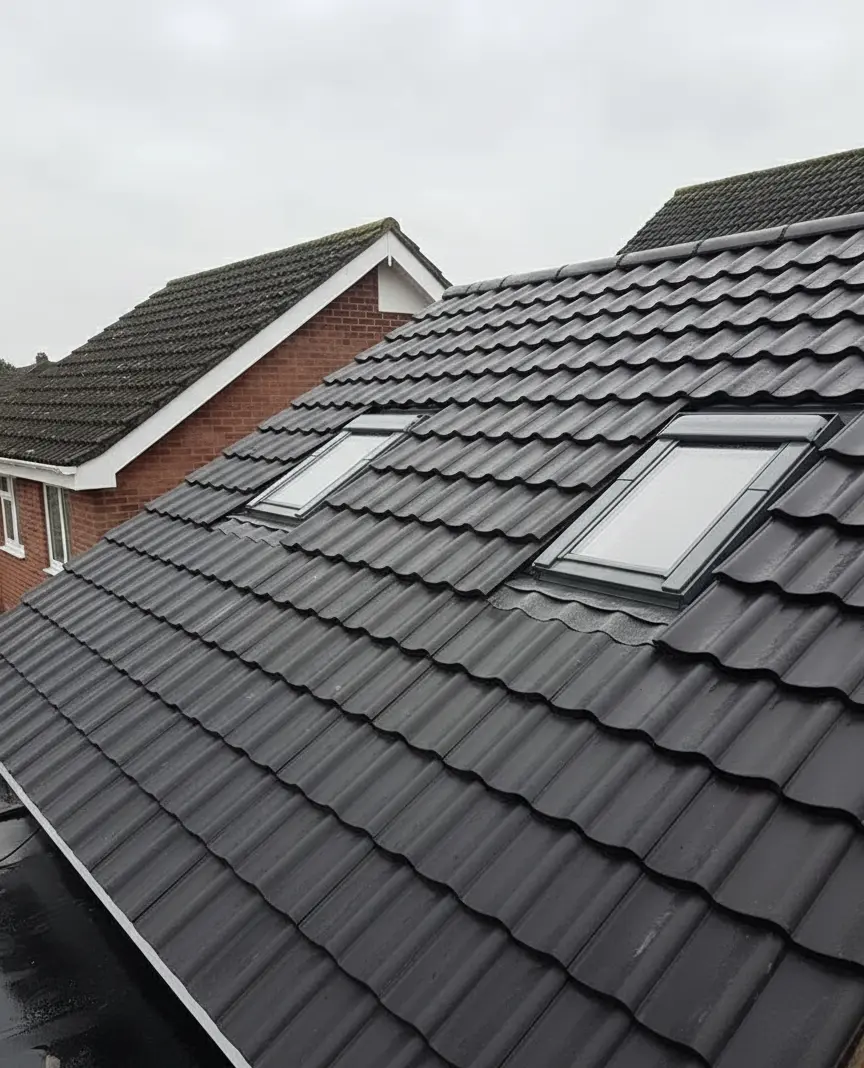
Damp is the second constant. Norfolk’s skies are hazy for long stretches, with dew and sea air lingering. Algae and lichen thrive on shady aspects, and timber remains slightly damp unless ventilation is spot on. You may not see leaks, but you see swollen fascias, moss-laden valleys, and ridges where the mortar has fatigued as cycles of wetting and drying take their toll.
Then there is temperature. We do not get the blistering highs of the south coast or the alpine lows of the Pennines, yet roofs here live through frequent shoulder-season swings. A chilly spring morning can jump by 12 to 15 degrees by midday. Materials expand and contract in those swings, and small weaknesses grow into slipped tiles, split lead, and popped fixings. Freeze-thaw shows up in hairline cracks on ridge mortar and the faces of concrete tiles exposed to water saturation.
Rain, wind, and the anatomy of a leak
Most leaks begin at joints and penetrations. In King’s Lynn, wind-driven rain forces water up and sideways, exploiting any lazy overlap, puncture, or blocked channel. I see three recurrent patterns.
First, slipped or fractured tiles along the windward slopes. The immediate cause is often a single nail or clip failing under uplift, but the underlying driver is years of gust loading combined with a tile that was never designed for that exposure. Some of the postwar concrete interlocks perform adequately in mildly sheltered estates but struggle on edges facing open fields or the Nar. A habit of relying on gravity with minimal mechanical fixing also lingers in older stock roofs, even where the site demands better specification.
Second, valley failures. Mortar-lined tile valleys scour under heavy flows, then hairline gaps invite more water under the courses. Fibreglass or metal valley trays help, yet they need proper upstand height and a clear path for debris. In Norfolk, moss build-up is steady rather than rampant, but oak and beech leaves from street trees clog a valley all the same. Once water backs up, it creeps sideways under capillaries and shows up on a bedroom ceiling five feet from the source. Many callouts tagged as “mystery leaks” turn out to be a shallow valley that collects autumn, then overflows in January.
Third, flashing fatigue. Lead survives decades if detailed right, but it does not forgive corner cutting. The typical failure here comes from overlong lengths without expansion joints, or lead pressed thin and then stressed by thermal movement. Repointing a flashing a few times without addressing the chase depth or fixings is the usual patch that buys a year and costs you two. On chimneys, the difference between water-tight and headache is often a proper stepped flashing and a tray with weep vents, not a bead of sealant on the day.
Salt air and the quiet corrosion problem
King’s Lynn is not perched on an Atlantic cliff, yet the Wash brings salt into the mix. Salt-laden moisture accelerates corrosion on fixings, vents, and any exposed ferrous metal. Galvanized steel that would last decades inland can pit and fail earlier here, especially on windward elevations. The effect is subtle: a vent grille flaking sooner than expected, nail heads staining concrete tiles, gutter brackets snapping under a modest ice load because the steel thinned from pitting.
This is one reason experienced King’s Lynn Roofers lean on stainless or high-grade coated fixings for exposed positions. The upfront cost rise is marginal in the context of a re-roof, but the return shows up around year 12 when everything still holds despite a couple of harsh winters. For flat roofs, edge trims and termination bars that shrug off salt pay back with fewer revisits. If you see rusty nail heads around eaves or ridge, do not only swap the nails. Ask whether the exposure at your site justifies a specification shift to stainless.
Freeze-thaw, brittle mortar, and ridge systems
Mortar takes a beating in this county. Repeated wetting, followed by cold snaps, opens fine cracks even when a ridge looks sound from the pavement. Traditional mortar-bedded ridges and hips are part of the streetscape, but many suffer from poor mix ratios or thin bedding. The result is sand particles blowing free, spalled edges, and mortar tabs bridging gaps where we should have ventilation.
Modern dry ridge and hip systems have changed the game. They tolerate movement, allow ventilation through the ridge line, and survive wind better when installed correctly. I used to hesitate on heritage houses where a crisp mortar silhouette suits the roof. Now I often recommend a good dry ridge system tucked neatly beneath ridge tiles, especially on exposed sites. For period properties that require a traditional look, a high-quality lime mortar, careful bed depth, and discreet mechanical clips offer a compromise. Either way, the aim is resilience against Norfolk’s wet-cold-warm cycle without turning the roofline into a maintenance calendar item.
Moss, algae, and the temptation to jet wash
Shady north and east slopes accumulate moss and lichen faster than sun-kissed south ones. Moss looks harmless and even rustic to some, but it holds moisture against the tile surface and wicks water across laps under wind. In winter, that retained moisture freezes and expands, opening micro-cracks and nudging tiles. The most damaging response is a high-pressure wash that strips the protective surface from concrete tiles or displaces interlocks on clay.
A safer approach is gentle cleaning paired with biocide treatment. On fragile roofs, a soft brush to remove bulk growth, then a low-pressure biocidal application extends the clean period to two or three years. If you must treat often, ask why moisture is lingering. Nearby trees may be shading the roof or dropping enough debris to keep tiles damp. Improving ventilation also helps a surprising amount, as a well-vented roof dries faster after rain. A conversation with a roofer who understands local species and microclimates often saves you more than a contractor with a pressure lance and a free Saturday.
Flat roofs and Norfolk’s long damp spells
Flat roofs do not fail because they are flat, they fail because they are poorly detailed in climates like ours. Long, cool damp spells lift felts that rely solely on heat-welded laps without robust edge termination. Ponding may not be catastrophic if the membrane is designed for it, but standing water under wind-driven rain finds any pinhole at a parapet or rooflight. I see two recurring issues on local flats.
The first is inadequate falls. Builders often aim for the textbook 1:80 or 1:60, then reality and settlement make it less. On long runs, that means shallow ponds that never fully dry in winter. Ethylene propylene diene monomer (EPDM) membranes tolerate ponding reasonably well, but poor detailing at terminations or pipes still leaks. Modified bitumen systems can perform as well or better if the installer nails the laps and trims, yet they dislike persistent standing water at unresolved laps.
The second is inadequate edge upstands and termination bars in windy corners. The wind that scours fields east of town lifts poorly fixed edges and works them like a hinge. You do not see a problem when the roof is new. You see it when the first freeze follows a December gale and an edge lifts enough to let water under the first metre. Spending a little more for robust trims, stainless termination bars, and secure fixings into sound masonry is the difference between a roof that ages gracefully and a sequence of winter callouts.
Ventilation and the quiet war on condensation
If there is one hidden issue across King’s Lynn that causes more secondary damage than people realise, it is condensation. A cold, damp winter with a family drying clothes indoors pumps litres of water into the air. Without adequate roof ventilation, that moisture condenses on the underside of felt or sarking, wets insulation, and drips onto ceilings. You may think you have a leak. Sometimes you do. Often you have a ventilation deficit that mimics a leak during cold spells.
Breathable membranes help but are not a magic blanket. You still need airflow, especially at the eaves and ridge. On hipped roofs with limited ridge length, consider discreet tile vents paired with eaves vents. On older properties with no soffit vents, tidy over-fascia ventilation can be retrofitted during gutter works. In the last decade I have seen moulded timber, swollen chipboard, and failing fixings that trace back to a lack of roof airflow, not the weather outside. To make matters worse, a well-meaning insulation top-up that blocks the eaves worsens the problem.
If you are quoting or commissioning a reroof, ask how ventilation will be achieved. An extra half hour spent planning vents around unusual geometries can save you a thousand pounds in rebound repairs and redecoration.
Choosing materials for Norfolk’s mix of wind, damp, and salt
A roof in King’s Lynn does not require exotic materials, it requires materials chosen with the site’s exposure and detailing in mind. Clay tiles endure well on traditional houses in sheltered streets. Quality concrete tiles perform admirably on many estates, provided they are properly fixed per exposure. Natural slate looks right on certain period roofs, but soft slates can delaminate faster at edges in areas with persistent moisture and salt air. Good Welsh or Spanish slates are still strong choices if the budget allows, with proper headlap for the pitch and exposure.
Metal fixings deserve special attention. A switch to stainless steel nails and screws for exposed positions is a small line item that heads off corrosion in our coastal-influenced air. For lead, stick with Code weights that match the span and include expansion joints for longer runs. For gutters, aluminium and uPVC both have a place. Aluminium handles UV and temperature better over time, while uPVC is budget friendly and adequate where ladders can reach for maintenance.
For flat roofs, EPDM is popular because it takes well to simple shapes and has few seams. For busy roofscapes with lots of penetrations, high-quality torch-on bitumen systems or liquid-applied membranes can be more forgiving if installed well. The key is not just the membrane, but how edges, upstands, and terminations are executed. Ask to see sample details, not just brochures.
Maintenance rhythms that fit Norfolk’s seasons
You can keep a roof healthy with small, regular tasks that stare down the way our local weather ages materials. Think in terms of early autumn and late spring, because those windows set you up for the season you are about to meet.
Early autumn is about clearing and checking. Sweep valleys and gutters, clear downpipes, and inspect eaves for signs of bird nesting or insect ingress. Make sure the first two courses on windward slopes are well fixed. Check for hairline cracks in ridge or hip mortar and loose verge pieces. Roofers in the area spot telltale patterns by street: on some avenues, the west-facing slopes always give up first. Locals have learned to check those sides before the first big blow out of the southwest.
Late spring is about addressing what winter revealed and preparing for summer expansion. Reseat any tiles eased by frost, repair or replace lifted flashings, and treat moss on shaded elevations before it bakes on. If you are considering repainting or refacing fascias, that window gives you dry, mild conditions and longer days.
For owners in exposed spots near open fields or the riverfront, a third light check in midwinter after the first big storm is prudent. A 20-minute look from the ground with binoculars catches many issues before the rain sets in for a week.
Case notes from King’s Lynn streets
A 1930s semi off Gaywood Road developed a stain in the stairwell ceiling every February. The roof looked intact. The culprit proved to be a shallow mortar valley under a mature beech, loaded with leaf mulch. During cold snaps, the mulch froze into a dam, and meltwater crept under. A simple retrofit of a GRP valley tray with proper upstands and a commitment to clear leaves King's Lynn Roofers Click Here each October ended a five-year cycle of repainting.
On a chalet bungalow near the river, the owner fought recurring leaks at the abutment where a dormer met the main slope. Three attempts of sealant and patch repairs failed. A survey on a windy day revealed the lead flashing had no expansion allowance, and the chase depth was inconsistent across old brick. Replacing with stepped lead, proper clips, and a cavity tray solved the leak. The add-on many skip, a small weep vent in the tray, kept the hidden joint dry. That detail matters in our damp, low-sun winters.
At a business park unit east of town, a flat roof with EPDM held up fine until a winter gale lifted the edge trim and peeled the membrane back half a metre. The trim was screwed into soft timber packers rather than solid substrate. The fix was straightforward: new treated timber, stainless fixings into masonry where possible, a more robust aluminium trim, and a bead of compatible sealant where the manufacturer required it. Since then, the roof has sat through two rough winters without complaint.
When to call a professional, and what to ask
Early intervention is good sense, yet you can waste money if you do not pinpoint the cause. Many homeowners ring roofer kings lynn after a single damp patch. A thoughtful inspection beats a quick quote for a generic “roof sealant treatment.” If you bring in King’s Lynn Roofers who work the area year-round, ask about:
- Exposure-specific fixing schedules and whether your roof exceeds basic minimums for your street’s wind profile. Ventilation strategy, especially on hipped roofs or where insulation upgrades risk blocking eaves airflow.
Two questions often reveal whether you are dealing with experience or guesswork. First, how will you trace the water path if the leak shows up far from the suspected entry point? A good answer mentions underlay drape, batten direction, and capillary action in valleys or flashings. Second, what is your plan for hidden details like tray flashings at chimneys or abutments? Vague answers that circle back to surface sealants are a red flag.
Renovation trade-offs on older homes
King’s Lynn has a rich mix of brick terraces, Victorian villas, and mid-century infill. Upgrading roofs on these properties involves balancing character, regulations, and the reality of local weather. On conservation-minded streets, replicating clay plain tiles feels right. If the house sits in an exposed position, the detailing around hips, valleys, and ridges must be modern in function while traditional in appearance. Mechanical fixings tucked under courses, breathable membranes with proper laps, and discreet ridge ventilation can preserve the look without repeating the shortcomings of the past.
On mid-century properties with concrete interlocks near end-of-life, owners often face the repair-or-replace question. Repair is viable if the majority of tiles are sound and failures are limited to ridges, verges, or a few wind-scoured patches. If tiles are shedding surface grit, edges are rounding, and many have hairline cracks, the next big storm will keep you on the phone. Re-roofing with a similar profile but better fixings and ventilation typically reduces callouts for decades. It is the sort of investment that changes a house from reactive maintenance to a very occasional glance.
Insurance, storms, and documentation
Norfolk’s storm claims are rarely spectacular, but insurers still require evidence. Photos of your roof in good order taken once a year, plus any invoices for maintenance, go a long way when a gust lifts two dozen tiles. After a storm, document damage before touch-ups, even if the job is urgent. Good local roofers know to photograph lifted ridges, snapped clips, and scoured valleys as a matter of course, because wind-driven rain leaves its signature. That habit keeps disputes short and payouts on time.
If your policy requires “reasonable maintenance,” keep gutters clear, replace obviously broken tiles, and address failing mortar on ridges in a timely way. Insurers do not expect a perfectly new roof, but they do expect that you did not ignore a preventable problem.
The economics of prevention in this climate
Every homeowner runs the numbers in their head. Spend a few hundred now or wait for a bigger bill later. In King’s Lynn’s climate, small preventive spends usually win. Upgrading exposed fixings to stainless might add 1 to 3 percent to a full reroof. A proper dry ridge system may add a similar margin. Those two choices alone prevent many common failures under our wind and damp cycles. Clearing valleys and gutters twice a year costs little if you can do it safely, and less than a callout if you cannot.
The hidden savings show up in interior finishes. Every time a ceiling stains, you are not only paying for a roofer. You are also redecorating, perhaps drying insulation, and living with disruption. When people ask for the best value change for a tired but not yet failing roof, I often suggest a ridge and ventilation upgrade, a review of windward fixings, and a plan for moss control. Those three touchpoints match the way Norfolk’s weather actually attacks a roof.
A word on safety and sensible DIY
Many owners can check roofs from the ground with binoculars, clear low gutters, and spot obvious slipped tiles. Anything beyond that demands caution. Wet tiles are treacherous. Fragile coverings like older slates can break underfoot, and even robust concrete tiles can dislodge on a windy day. If you do climb, pick a dry, calm morning, use proper ladders, and avoid stepping on valleys or near the ridge. Better yet, pay a professional for periodic inspections. The cost is modest compared to a slip that ends in A&E.
Bringing it together for King’s Lynn
Roofs in Norfolk do not fight hurricanes or blizzards. They face the slow grind of wind-driven rain, damp air, salt, and frequent temperature swings. You protect against that grind with details: secure fixings that suit your exposure, valleys with proper trays and clear water paths, flashings with expansion built in, and ventilation that keeps the structure dry from within. Materials matter, but craftsmanship and locally tuned judgment matter more.
If you are planning work, look for roofer kings lynn providers who talk fluently about wind exposure by street, headlaps by pitch, and the practicalities of keeping a roof dry in shoulder seasons. Ask for examples of similar roofs in your part of town, and request photos that show the unglamorous details. Good roofing in King’s Lynn reads less like a brochure and more like a set of quiet, reliable choices that respect what our weather does year after year.
Invest in those choices, and your roof will return the favour with decades of silence, even as the wind tests the eaves and the rain blows in sideways from the Wash.